Thinking about a gated neighborhood in Hunters Creek and wondering if the benefits are worth the dues and extra steps at the gate? You’re not alone. Choosing between gated and non-gated living affects your daily routine, your budget, and even how guests and deliveries reach your home. In this guide, you’ll learn how each option works in Hunters Creek, what amenities and rules typically come with them, and a practical checklist to compare properties with confidence. Let’s dive in.
Hunters Creek at a glance
Hunters Creek is a master-planned community in southwest Orange County with dozens of single-family and multifamily neighborhoods built mostly from the late 1980s through the early 2000s. It spans about 6.5 square miles with internal parks, trails, lakes, and community events that serve residents across the area. You’ll find retail and services clustered around Town Center Boulevard and John Young Parkway, which carry the bulk of local traffic. For a quick community overview, review Orange County’s page on Hunters Creek’s location and amenities.
Location and access
You can reach regional routes quickly from Hunters Creek. John Young Parkway, Town Center Boulevard, Florida’s Turnpike, and SR-417 provide direct links to Orlando job centers, the airport, and the theme-park corridor. Traffic along Town Center and John Young tends to spike during peak periods, which can affect commute times and gate queueing for some neighborhoods. Local traffic counts along the area’s retail nodes reinforce that these corridors see steady volumes; you can scan a nearby commercial map for context on traffic along Town Center and John Young.
Parks and community life
Hunters Creek offers multiple parks and trails that many residents use daily, including Osprey Park, Calabay Park, and Vista/Eagle parks. These public spaces and community events support both gated and non-gated residents. Explore a local overview of public parks in Hunters Creek.
Gated living defined
In Hunters Creek, you’ll find both smaller gated enclaves and larger, guarded communities. Examples often cited locally include Ashton, Audubon Villas, Calabay Cove, Devlin Green, The Fairways, Hunter’s Isle, Sandhill Trace, and Tanglewood. Features vary by subdivision, but you’ll generally see two models.
Gated (unmanned) entries
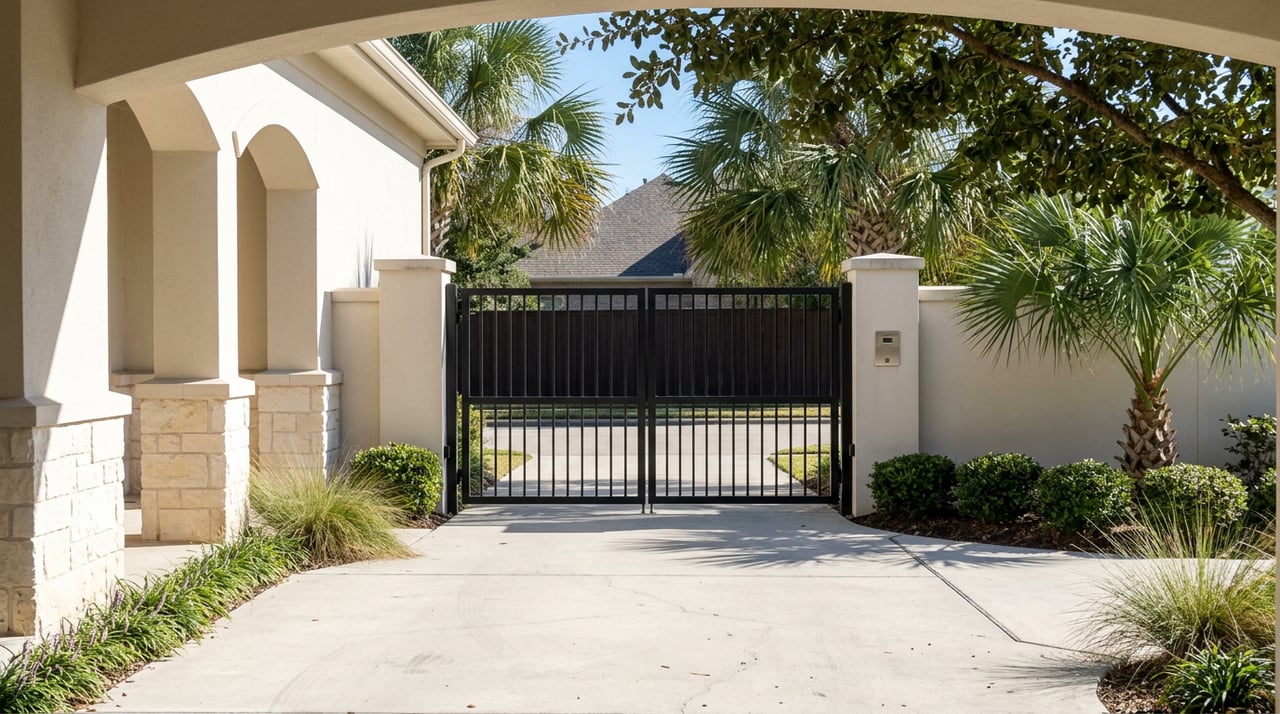
This setup usually includes an automated arm or gate with a keypad, remote fob, or app access. It can reduce cut-through traffic and add a sense of separation from surrounding roads. Guests, deliveries, and contractors follow a posted access process. Because gates and entry monuments are common areas, the HOA typically handles maintenance and repairs.
Gated and guarded entries
Guarded communities add staffed visitor screening and often include resort-style amenities like a larger pool, clubhouse, and lit sports courts. These features are attractive if you want more services, but they usually come with higher regular assessments to cover staffing, lighting, and hardware.
Private roads and maintenance
Gates often signal private internal roads, which means the HOA schedules and pays for street maintenance, repaving, landscaping near monuments, and some lighting. That can be a positive if you like the consistency of HOA-managed spaces. It also means you’ll want to review the community’s reserve planning for long-term projects. Many Hunters Creek neighborhoods operate under both a sub-association and a master association; you can find contacts in the area’s HOA directory.
Non-gated neighborhoods
Non-gated subdivisions in Hunters Creek share access to the same broader network of parks, trails, and community events. Streets are open to the public, which means guests and deliveries reach your driveway directly. You’ll often see lower monthly or quarterly dues compared with guarded gated communities, since there’s no staffing or gate hardware to fund. In many cases, owners handle more of their own exterior maintenance than in tightly managed gated enclaves. For daily recreation, you’ll likely rely on the master plan’s common parks and trails, like those listed on the Hunters Creek parks page.
Costs and HOA governance
Your total monthly or annual housing cost depends on several association factors. In Florida, most single-family HOAs are governed by Chapter 720 of the Florida Statutes. Associations must keep official records, maintain budgets, and make financial reports available to owners, with additional rules for audits and record access. You have the right to review budgets, reserves, meeting minutes, and insurance coverage. Learn the basics in Chapter 720.303 of the Florida Statutes.
What HOA dues commonly cover
- Common-area landscaping and irrigation
- Pool, clubhouse, courts, and playground upkeep
- Gate operation, guard staffing if applicable, and access hardware
- Property management fees and common-area insurance
- Reserves for future capital needs
In Hunters Creek, guarded communities typically report higher recurring dues because of staffing and larger shared amenities. Smaller gated enclaves and most non-gated areas often have lower dues, though inclusions and frequency of billing vary by sub-association. Always verify current amounts directly with the association and review the estoppel to confirm balances.
Reserves and special assessments
Florida law gives HOAs flexibility on reserves, which means some associations may reduce or waive them by owner vote. If reserves are minimal, there is a higher chance of special assessments when large repairs come due. Condo associations follow different, stricter reserve and study requirements. Recent legislative updates also address record access and architectural review processes; you can scan a legal summary of new community association laws.
Daily logistics: access, visitors, and traffic
A gate will change how guests, deliveries, and service providers reach your home. Expect call boxes, passcodes, or preauthorization. That extra step is simple for most residents, though very strict procedures can slow down couriers or first-time visitors.
Traffic patterns matter too. Hunters Creek’s main corridors see peak congestion, and concentrating neighborhood entry at a gate can create short queues at busy times. When schools adjust drop-off routes or a nearby plaza gets busier, local travel times can shift. A local report on school-area circulation shows how traffic changes near Hunters Creek can affect daily life. For context on volumes around Town Center and John Young, review this traffic-oriented area map.
Buyer checklist: gated vs non-gated
Use this checklist to compare specific homes and associations in Hunters Creek. Bring it to showings and request documents during your inspection period.
- Confirm the association structure
- Identify the sub-association and whether a master association applies. Get the manager’s contact info. Use the local HOA directory to locate official details.
- Clarify gate type and guest process
- Ask whether the gate is automated or guarded, what hours apply, and how visitors gain entry. Visit during morning and evening peaks to watch queueing. Local reporting shows that nearby traffic changes can influence timing.
- Understand dues and inclusions
- Request the current budget and a line-item list of what dues cover, including any lawn care, cable or internet, security, and reserves. Compare several recent listings for consistency, then verify with the association and the estoppel.
- Review reserves and upcoming projects
- Ask for the latest reserve balances and any planned capital projects. If reserves are low or waived, plan for possible special assessments. See your rights to review financials in Chapter 720.303.
- Read the governing documents and minutes
- Request the declaration, bylaws, rules, ARC/ARB guidelines, annual budget, financial statements or audit, and recent board meeting minutes. Florida law sets record-keeping and access requirements for owners.
- Order the estoppel or resale certificate
- Confirm dues, assessments, and any liens before closing. Ask about fees and turnaround times. The HOA directory can help you reach the correct manager.
- Check ARC/ARB timing
- If you plan to change paint, fencing, roof materials, solar, or pool enclosures, ask how long approvals take and what standards apply. Recent updates clarified aspects of ARC/ARB processes; see the legislative summary.
- Confirm rental policy
- If you intend to rent your home, verify minimum lease terms, any short-term rental restrictions, registrations, and required insurance in the CC&Rs and amendments.
- Ask about streets and services
- Determine if internal roads are private or public. Private roads usually mean the HOA funds repaving and certain repairs. Confirm trash schedules and whether any bulk services are included in dues.
- Visit at multiple times
- Tour the neighborhood during weekday mornings, evenings, and weekend midday. Note gate operation, parking, noise, and street maintenance. Also drive the nearest retail and school routes to gauge external congestion.
Which option fits your lifestyle?
Choose gated if you value controlled access, consistent common-area maintenance, and, in some cases, private or resort-style amenities. Be ready for extra guest procedures and higher dues where staffing and expanded amenities exist. Choose non-gated if you prefer simpler access for family and services, often lower recurring costs, and easy use of the area’s public parks and trails. You can still find strong curb appeal and well-kept streets, just with fewer gate-related steps.
The best approach is to compare real numbers and real routines. Line up the HOA budget against what you personally value. Then stand at the gate or entrance during rush hour and see how the flow feels. A few focused visits will tell you more than any brochure.
Ready to see how gated and non-gated options in Hunters Creek line up with your goals? Let’s talk through fees, rules, traffic, and your short list of homes, then tour at the right times of day to validate the fit. When you are ready to move, connect with Lisa Owen for local guidance and a clear plan forward.
FAQs
What is Hunters Creek, and where is it?
- Hunters Creek is a master-planned community in southwest Orange County with multiple neighborhoods, parks, and retail nodes near Town Center Boulevard and John Young Parkway. See the county’s community overview for context.
How do gated and guarded communities differ in Hunters Creek?
- Gated entries use automated access to limit cut-through traffic, while guarded communities staff a visitor station and often include larger amenities. Guarded setups typically carry higher recurring dues to fund staffing and systems.
Do gated neighborhoods usually have private roads?
- Often yes. Private internal streets and entry monuments are typically maintained by the HOA, which affects long-term budgets for repaving, lighting, and landscaping. Confirm road ownership with the association.
How do gates affect deliveries and guests?
- Expect call boxes, codes, or preauthorization for visitors and service providers. Procedures help manage access but can add a few minutes, especially during busy periods or at stricter guarded gates.
What documents should I review before buying in an HOA in Florida?
- Request the declaration, bylaws, rules, ARC guidelines, current budget, financials, recent board minutes, reserves detail, and an estoppel. Owners have record-access rights under Chapter 720.303.
Are short-term rentals allowed in Hunters Creek neighborhoods?
- Policies vary by sub-association. Some limit short-term rentals or set minimum lease terms. Review the CC&Rs and any rental amendments before you commit.